Part 1: The Loveliness
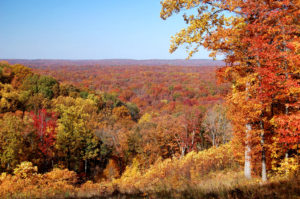
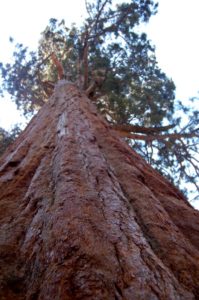
Our beautiful cousins, thus were trees described by the late Carl Sagan in Episode 4 (Heaven and Hell) of his highly praised television series Cosmos. Few would argue with his claim that trees are beautiful. Many others might take issue with his assertion that they are our cousins. There is bountiful evidence that he was correct on both counts.
My first awareness of trees as individuals representing an alien clan, another form of life, came as a child. In our backyard was an apple tree. Its’ low, sprawling limbs were an unspoken but clear invitation to climb. I found that one cannot climb into a tree without becoming aware of bark and texture, leaf and bud, a yielding to the touch. The sensual contact between their skin and ours demands consideration of how we are alike and yet, so different. Gaining age, experience, and strength I proceeded to climb into the maple trees that grew around our homestead. I was thrilled by the new perspective upon the world gained by leaving the ground. To be sure there was also a certain element of risk. To vacate terra firma is to flirt with the ramifications of gravity. But, even as a child, I had the intuitive sense that a world devoid of risks was an exceedingly uninteresting world indeed. One cannot sit high in a tree and remain unaware of being enfolded within a living entity as it surrounds, supports, and shares communion with us.
Growing up in rural Indiana I was surrounded by trees. Granted, the landscape also contained substantial expanses of corn, soy bean, and hay fields. But there were enough patches of woodland left to make the deciduous forest a significant component of my aboriginal world. Though but a child, there were trees enough for me to understand that they were the source of much of my world’s beauty. Now, sixty years later, it is much more difficult to find an unbroken piece of deciduous forest around my home. Here in Sullivan County, all the primal forests have been clear-cut at least once for their timber or pulp. Much forest here has been replaced by farmland. Still more of the forest in this part of southwestern Indiana has been erased from existence by strip-mining. Some of the older mined land, reclaimed with tree plantings, does at least bear a resemblance to the original deciduous forest. But lately the reclamation process causes one to believe they are amongst the rolling grasslands of Kansas rather than the mixed farmlands and woods of the Hoosier state.
 Eighty-seven percent of Indiana’s twenty-three million acres was once covered by forest. Today, that figure is about twenty percent. According to the Indiana Dept. of Forestry, there are less than two thousand acres of old growth (> 150 years old) remaining in the state. Less than half of this consists of forests uninfluenced by humans, what we call virgin timber. These remaining old growth plots of forest remind us of what has been lost. Some trees in the recently protected Meltzer Woods in Shelby County and the Wesselman Woods Nature Preserve in Vanderburgh County are thought to be four hundred years old. I find that expanse of time difficult to grasp. Such trees were standing impressively large when the Revolutionary War with Great Britain was fought. The great lifespan of many trees is, I suppose, one of the attributes that draws me to them in near worshipful admiration. Our human existence, measured in decades, seems mighty puny compared to that of a tree such as a bristlecone pine that was laying down wood six centuries before Tutankhamun ascended the throne of ancient Egypt.
But all is not lost. We still have substantial areas of forest in the eastern United States (and the west of course). We have done some recovering since the days around the turn of the 20th century when eastern forests were being cleared at the rate of thirteen and a half square miles per day. In fact, according to a report from The Forest History Society, over two-thirds of our nation’s area which was forested in 1600 is still covered by woodlands of various types today. Of course, due to a history of clearing for farming, use for fuel and charcoal, and timber production, these forests differ substantially from what they were in the 17th Century. Although I still see trees, I am often reminded of Aldo Leopold’s observation that, “One of the penalties of an ecological education is that one lives alone in a world of wounds.”
To sense what the virgin forests of Indiana must have been like, one must search out the few remaining tracts. My own familiarity with such an undisturbed, old growth forest comes from visits to Donaldson Woods 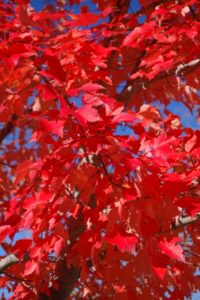 Nature Preserve located in Spring Mill State Park in Lawrence County, Indiana. The few pieces of old forest that remain in Indiana persist thanks to individuals who simply couldn’t bear to see these beautiful woodlands destroyed. Whether their reasons were allied to a sense of historical preservation, sentimentality, or even spirituality I do not know. I do know that I owe them a great debt of gratitude for making it possible for me to experience a primordial piece of our natural world. For this particular 67 acres of woodland we owe thanks to the unconventionality of George Donaldson who immigrated to Indiana from Scotland just after the civil war. In a time when the conformist wisdom called for one to market one’s timber and establish a farm Donaldson resisted. As Scott Russell Sanders has noted in his book A Conservationist Manifesto, Donaldson, . . . made no use of the land at all, except to walk around and admire it. No wood cutting, no hunting, no extraction of limestone; these were his rules. Thanks to these guidelines I can now wander through a living museum of natural history, a vestigial portion of Indiana as it existed in pre-settlement times.
It is the size of the trees that, to me, makes Donaldson Woods so special. In the second growth forest around my home, I am lucky to find a tree greater than two feet or so in diameter. The virgin timber in Donaldson Woods includes yellow poplar and white oaks nearly six feet in diameter at breast height. There are American beech trees nearly three feet across. Shagbark hickory and sugar maple, sycamore and ash are here too; all standing with 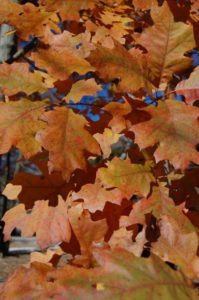 their most impressive bearing. Towering well over one hundred feet in height, they are mighty impressive representatives of their kind. While passing beneath these giants, I am reminded of Tolkien’s forests: Fangorn, Mirkwood, Lothlorien – old beyond guessing, massive of limb, immense of trunk, towering upward through the dappled sunlight, leafy canopies forming a living roof above the head. In spring the understory of this wondrous place is dappled with dogwood white and the rosy purple of redbuds. The forest floor is colored by the virginal white of bloodroot, the ornate purple of violets, the azure blue of Virginia bluebells, the gaudy yellow of dogtooth violets,. Of course this forest is a system not just a collection of trees and herbs. And so the scene is made even more vibrant by the chatter of gray squirrels, the repetitious bird-like chips of the chipmunk, the brash kuk-kuk-kuk-kuk of a pileated woodpecker, and the poignantly liquid soliloquy of a wood thrush.
Being an ecosystem of ancient and rich texture, this old grow forest also carries out a host of activities not visible to the human eye. I was once clearly reminded of this when I took one of my biology classes on a visit to Donaldson Woods. Why, asked one of my students, don’t the trees form a pit beneath themselves as they use up more and more of the soil in which they grow? What a great question! Why not indeed? It seems logical, since trees are so firmly rooted in their place, to imagine them carrying more and more of the soil’s components up into their tissues. In fact, this very question was of great interest by at least the year 1648. It was at this time that the Belgian scientist Jan Baptista van Helmont undertook to discover whether or not trees were “eating” the soil so to speak in order to accomplish their growth.
This is how van Helmont conducted his experiment. Into a container  holding two hundred pounds of soil he placed a willow sapling. Over the next five years he watered the tree. At the end of this period of time, he removed the tree from the soil and weighed it. At the beginning of his experiment, the willow had weighed five pounds; now its weight was one hundred and sixty-nine pounds. van Helmont then weighed the soil in the container and found that it had lost only two ounces of weight. Since he had done nothing but water the plant, van Helmont concluded that the one hundred and sixty-four pounds of tissue formed by the tree had come only from the water he had supplied. Unknowingly, Jan van Helmont had germinated the beginnings of our understanding of photosynthesis; the process which makes it possible for most of the life on earth to exist.
Biologists now know that it is not from water alone that green plants build their tissues of root, stem, and leaf. A succession of experiments over the next century or so eventually elucidated the process of photosynthesis. It has been found that much of the water taken up by plants is transpired from their leaves. Each molecule of water leaving the stoma of a leaf exerts a forceful tug upon the train of water molecules extending back down the tree to the roots. This is part of the mechanism which pulls water molecules upward in a plant in the absence of a pump (heart).
Scientists also eventually understood that the gas carbon dioxide was of extreme importance in the photosynthetic process. Additionally, the necessity of sunlight for the occurrence of photosynthesis was revealed. One might summarize this incredibly complex series of biochemical reactions thusly. Green plants (the green pigment chlorophyll is necessary too) take up water from the soil via their roots and take carbon dioxide from the air through pores in their leaves. In the presence of sunlight (a source of energy to drive the process) plants rip apart some of the water and the carbon dioxide molecules. They now have a supply of carbon, hydrogen, and oxygen atoms; basic elements for building organic compounds. We might compare this to tearing down an old barn and reusing the weathered boards and timbers to construct a recreational cabin.
By rearranging these elements and adding a sprinkle of ingredients from the soil, such as nitrates, plants are able to build sugars, starches, oils, and proteins. These compounds are then used to construct the tissues from which stems, leaves, roots, and flowers are made. Oxygen gas is given off as a byproduct of photosynthesis and is used by animals as a respiratory fuel. They in turn exhale carbon dioxide which can be taken up by plants for use in photosynthesis. A miraculous balancing act this is and one which, along with photosynthesis’s mirror image process cell respiration, keeps most of the living world chugging along. And this, prized student, is why the trees in Donaldson Woods do not “eat” the soil beneath their feet.
6H2O + 6CO2 —–———–> C6H12O6 + 6O2
Thus would I submit that trees are not only beautiful in form with their noble trunks, their robust branches, their luxuriant leaves of emerald, olive, and jade; they are also of inordinate exquisiteness in function. Not eaters of the soil but eaters of the sun they are. Each leaf is a tiny solar array capable of capturing light energy and transforming it into energy of chemical form. Having made this energy transformation, the tree is now able to perform a biochemical sleight of hand of staggering complexity. By building the aforementioned organic compounds, proteins and such, the tree is now able to make wood and meristem, cambium and bark, xylem and phloem, mesophyll and chloroplast.
A magnificent poplar or oak, standing tall and solid, is made essentially from carbon dioxide gas and water. Imagine if we could do that. Doubtless a skin of green might take some getting used to but we could subsist solely on a few hours of sunbathing or sitting beneath a grow-light each day. Adding the occasional glass of water, and perhaps a multivitamin we could convert light energy into food and tissue – automatic, effortless, wondrous. So it is with the trees, wondrous in both form and function.
Part 2: The Relationship
But recall that Carl Sagan referred to trees not just as beings of great beauty. He also denoted them as our cousins. Is this possible? A cousin is often defined loosely as a thing related to another. We might think of the ukulele and the guitar as cousins for example. But, in the case of the trees, Sagan meant something more akin to our notion of a cousin as a member of our extended family; an actual relative by descent. Should we, could we think of trees in this way? There is plentiful biological evidence to suggest that Sagan was without question correct.
When humans first began to categorize the relationships of organisms, in what we might think of as an observational, scientific manner, the criteria for classification were broad. Animals might, for example, be classified as blooded or bloodless, or as creatures of the air, land, or water. As science progressed, it didn’t take long for astute observers to notice that lumping organisms such as fish, whales, and ducks into a group because they inhabited water was a highly inaccurate measure of their real relationships. Enlightened taxonomists such as Linnaeus, Owen, and Cuvier turned to similarities and differences in anatomical structure as the keystone to understanding taxonomic relationships among organisms. For example, looking at forelimb structure (humerus, ulna, radius, carpals, metacarpals, phalanges) allowed the insight that mammals such as humans and whales are actually more closely related than whales and fish.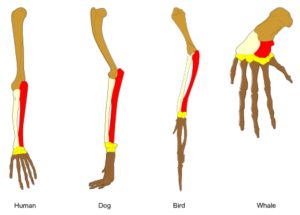
The same insight into our relationship with trees, and other plants, can be reasoned. At the cellular level, cells being the basic structural unit of living things, we find that plants and humans both possess a plasma membrane, nucleus, mitochondria, endoplasmic reticulum, and ribosomes as well as certain other structures.
We can go even farther. It is known that these structures arise because organisms have the instructions for building cells and their organelles encoded in their DNA. Cells build tissues, tissues comprise organs, organs create organ systems, organ systems function to form and sustain an organism. DNA is passed from ancestors to descendants. Back through the 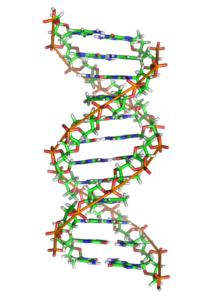 generations our DNA exists as an immortal thread connecting us with our deepest ancestry, linking us with the very origins of life on our planet. DNA analysis has become a powerful tool in fighting crime, proving paternity, and demonstrating our ancestry. The same biotechnological logic provides potent evidence of our relationship with the trees.
Beneath the skin, beneath the bark, written in the coded A’s, T’s, G’s, and C’s of our nucleotides lies the irrefutable proof of our kinship with oak and maple, redwood and sequoia. When comparing a snippet of the DNA sequence in a gene from a human – tct cca ccc tca ttt gat gac cgc aga – with that from an oak – tcc aca acc ctt tct gta ttc att cct – one is struck not by the strangeness of their differences but by the familiarity of their likenesses. A similar unity can be seen when we compare the DNA of any two organisms we might choose. The genetic code, which continues to surprise us with its complexity and dynamism, bears convincing evidence of the unity of all life. After all, organisms receive this wondrous code from their ancestors.
And so my friends, I hope you are fortunate enough to one day find yourself standing in the cathedral that we call Donaldson Woods, the basilica of Muir Woods, or the sanctuary known as Sequoia National Park. I hope you are able to someday find yourself sniffing a hint of vanilla within a stand of ponderosa pine in our American west. I wish you are granted the opportunity to paddle your canoe through a virgin cypress swamp whose trees were young when the first Europeans sailed the Atlantic. If you are granted these boons, perhaps you too will find yourself immersed in a sense of enraptured delight as you marvel at the beauty of our cousins the trees.
Photo Credits:
van Helmont statue - Henxter at WikimediaCommons
limb homology - Wikipedia.com
DNA molecule - Richard Wheeler at WikimediaCommons
All other photos by the author.
.
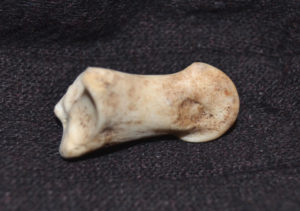 millimeters in length, 20 millimeters in height, 15 millimeters in width, and a ghostly white in color was this piece of inorganic poetry. It was the phalangeal bone of a white-tailed deer, a toe bone. How it came to be there all alone on that square foot of woodland floor was a puzzle. How it had achieved its perfection of form presented me an even greater mystery.
 self-replicating compound of extraordinary control, amazing elasticity, and astonishing potential. It is the shared strand that has been passed from generation to generation up through the branches of the biosphere’s phylogenetic tree. In this way, DNA weaves all life into the quilt we call biodiversity. Our small, blue world is such an extraordinarily special place – so beautiful, so enriched by its distinctive life forms, so
 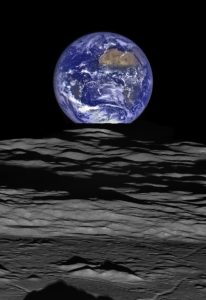 unique within the cosmos.
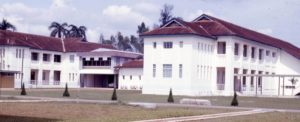
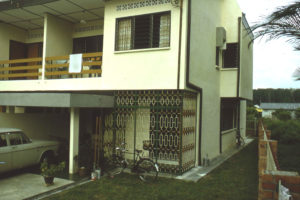 Corps-Smithsonian Institution Environmental Program. In Malaysia I worked as a vertebrate zoology lecturer in the biology department of the University of Agriculture (today’s Universiti Putra Malaysia). At that time, the university was rapidly expanding
  in both enrollment and physical size. Many of the biology department staff members were away in the U.S., Australia, or Great Britain pursuing advanced degrees. Peace Corps volunteers filled the void within the department until these folks returned from their graduate school experience.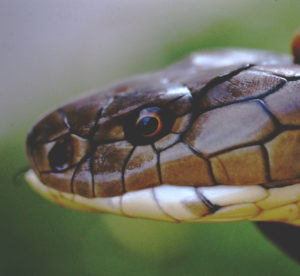
 Lumpur preparing for a fight with his British opponent Joe Bugner. Ali was tremendously popular in Malaysia where the state religion is Islam. The boxer had a huge entourage with him and the group occupied an entire floor of the Kuala Lumpur Hilton. His stay was marked by the accoutrements of stardom and his sorties to the training arena announced by siren-blaring police escorts.
 (photo by Mundo Gump at Wikimedia Commons)
 the University of Agriculture Malaysia or the Universiti Pertanian as it was then called. As soon as possible, I began to go on birding walks, make scouting forays for frogs, lizards, and snakes and peruse the literature on Malaysian mammals. All this was necessary because I would soon begin work as a lecturer in vertebrate zoology at the university. I needed to bring myself up to some degree of working knowledge regarding the local fauna and be quick about it.
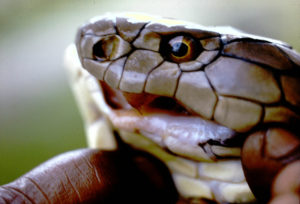
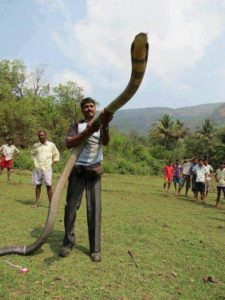
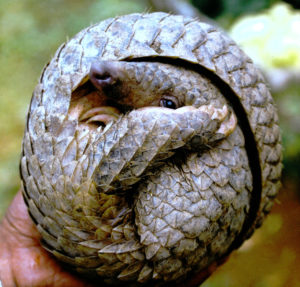 specimen would be produced, a Malayan pangolin and a leopard cat for example. Although I remember many of these animals with fond aesthetic and scholarly interest, my recollection of the first Malaysian cobra I received stands out as a most unforgettable experience.
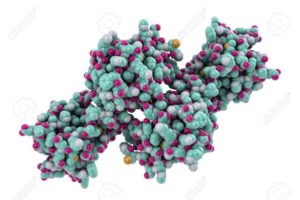 disturbing manifestations of neural paralysis such as drooping of the eyelids, drooling, numbness, tingling of the skin, and euphoria. These may escalate into truly life-threatening signs such as difficulty in breathing, shock, and respiratory failure. The effect of neurotoxins on the respiratory system has been likened to having another person sit on one’s chest while trying to breathe. Perhaps you will now understand why I looked forward to getting the captive cobra from the bag with some trepidation.
 forward, I immobilized its head with downward pressure applied across the parietal scales. With studious intent, I carefully placed my index finger on top of the head, thumb and middle finger just behind the skull and the cobra was secured. Supporting its body with my other hand, the specimen was carefully deposited into a cloth snake bag. This in itself was a critical step. If not cautious, or by using a snake bag too small for its occupant, one can be quickly confronted by a snake bent on escape which has used its tail, and its length, to spring right back out of the bag. With the container secured, I then moved the snake upstairs to my office where it was confined in a secure terrarium.
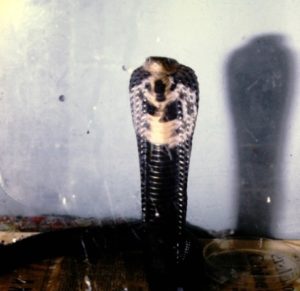 the cobra silently opened its mouth. Quickly, like jets from a pair of miniature squirt guns, two streams of venom shot against the terrarium’s glass. Cobras are well able to fixate on the face of an aggressor and aim the venom toward the eyes. Such was the case here and I welcomed the intervening glass. This type of behavior continued for the first couple of days of captivity. Any approach to the terrarium elicited a violent response. In the interim periods, when I worked at my desk, I would occasionally be seized by that odd feeling of being watched which we sometimes experience. Glancing over my shoulder at the terrarium, I would see the cobra silent, immobile but erect as a candle stick watching my movements. Even from across the room, motions of my hands or body would send the snake into an instant defensive posture and there it would stand unwavering, its gaze fixed upon me.
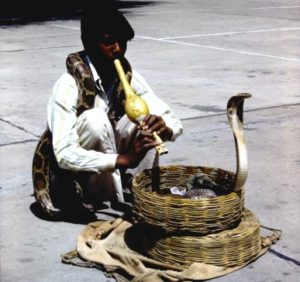 often replace them after a period of time. Like the cobra I encountered, they simply lose interest in performing and refuse to rise from the charmer’s basket.
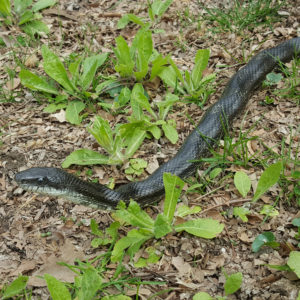 don’t deserve the fear many people experience should they come upon one of them.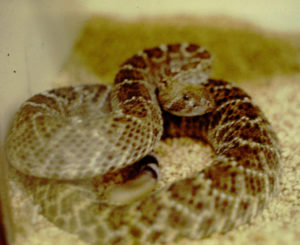

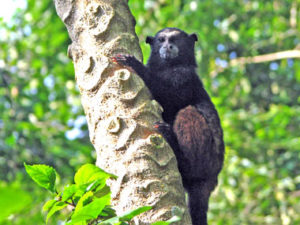
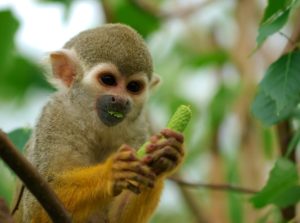 It was a mixed band of squirrel monkeys and saddle-back tamarins that had attracted my attention. Up ahead I could see their swift movements among the branches of a towering Inga tree. The calls of these
  little primates could easily be mistaken for the vocalizations of birds. In fact, it was their calling that had originally drawn my attention to the tree they were exploring. This tree was located only a few hundred yards from the majestic Amazon River in northeastern Peru. Here the Neotropical rainforest presented a most splendid exhibit of biodiversity. I was walking within a forest which held ten percent of the world’s plant species. Dispersed on and beneath the impressive community of forest giants – kapok, fig, pacay, Brazil nut – lived a multitudinous assemblage of fungi, insects, spiders, frogs, lizards, snakes, birds, and mammals. Stepping along the trail toward the little primates, I squeezed through a rich undergrowth of ginger, irapay and pona palm, philodendron, melastoma, and maranta. Although the comparison is shopworn, it really was akin to walking within a crowded greenhouse. In the background I heard the periodic calls of screaming piha’s. The piercing, exotic whistles of these rather nondescript, grayish brown birds cried out to me – “rainforest, this is tropical rainforest”. (You can hear one at the following link.)
 I listened as a continuous series of high-pitched squeaks, trills, and
 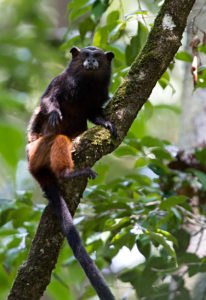 staccato screeches produced by the busy monkeys issued from the trees just ahead of me. Lifting my binoculars to my eyes, I once again scanned ahead and saw that the roving assemblage was much closer now. I could clearly make out individual animals within the primate band. If I could only get a little nearer I would really be able to observe their behavior. Lowering my binoculars, I began to move closer to the little animals. With one foot thus poised in mid-stride, there suddenly came to me a second thought. The how or why of this sudden, unbidden neuronal signal has puzzled me for many years. Whatever the source, there abruptly arose in my mind a delicate warning. Be careful it said. Watch where you step it whispered. Heeding this cautioning counsel without question, I glanced down at the trail. Lying there, directly in the path of my next step, was a snake. My heart made a sudden lunge into a higher gear. This was not just any snake. Resting there at my feet, its head slightly raised from the ground in alertness was a fer-de-lance, considered by many to be the most dangerously venomous snake in the Neotropics.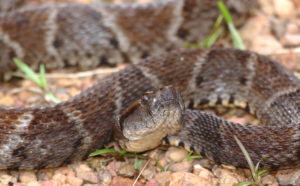

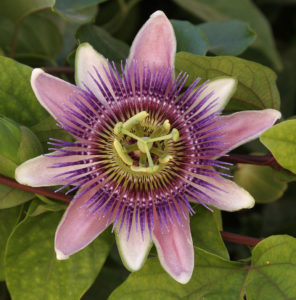 sion flowers, the heliconias, torch
 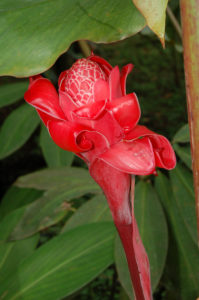 ginger, and the myriad species of orchids. Here at home, I am captivated by the loveliness of spring beauty and Dutchman’s breeches, catalpa and Virginia bluebell, Silphium and blazing star. They all seem to go beyond the bounds of practicality. The rich diversity of colors,
  shadings, crenellations, and flamboyancy seem to defy all reason.
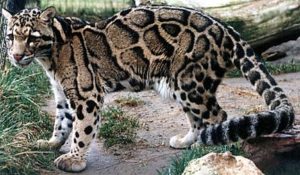 serve as sufficient camouflage within the middle layers of the rainforest. But no, this extraordinary cat is covered in a myriad of blotches of multitudinous shades from white to gray, fawn to black, sand to sepia. Arranged in a bedazzling array of smudges, spots, ovals, oblongs, and squares their coat renders them nearly invisible within their tropical forest home. But I can’t help but perceive that the pattern of their coat goes well beyond the bounds of a super-efficient camouflage. I cannot look at a clouded leopard and not find myself stunned by its absolutely exquisite beauty. I invariably feel a visceral emotion that is totally divorced from my understanding of the biological mechanisms which bring about this beauty. I dare say the feeling is more akin to the sensation I receive when contemplating an impressionist painting or listening to the opening strains of Beethoven’s Violin Concerto in D major.
 sheer elegance of form what could surpass the stealthily wading great egret or the striding black-necked stilt? What figures in motion are more graceful than the dynamic soaring of a wandering albatross or the lazy circling of a red-tailed hawk riding upon its invisible donut of air? Should we want to rank the beauty of
 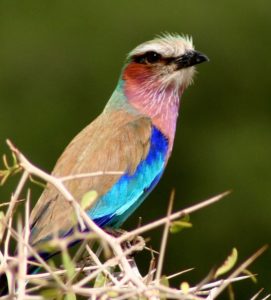 birds based upon their color, we might find that this too is not so simple. The colors and forms exhibited among the Aves seem nearly infinite. How could I hope to choose a winner from among the likes of Tanzania’s lilac-breasted roller, Costa Rica’s resplendent quetzal, our American wood duck, Malaysia’s Argus
  pheasant, or Peru’s masked trogon? Though I understand the adaptive nature of beak, wing and leg, I still cannot fully fathom why I am compelled to stare at such birds in dumbstruck reverence.
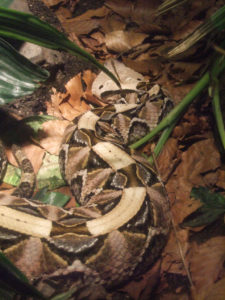 fact that it is an animal of great esthetic beauty. Lying quietly upon a bed of leaves, this serpent becomes virtually invisible. The rich mixture of browns, blacks, fawns, yellows, creams, and whites are arranged in an intricate pattern of blotches, rectangles, and leafy shapes that make it astonishingly difficult to distinguish. Looking upon one of these snakes, I must convince myself that an artist of supreme skill has not surreptitiously sneaked into the reptile house by night and completed a marvelous job of body painting
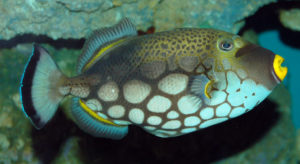 most beautiful contest. Rainbow trout, rainbow darter, clown triggerfish, dolphinfish, Achilles tang, lion fish, angel fish, and Moorish idol. How could I
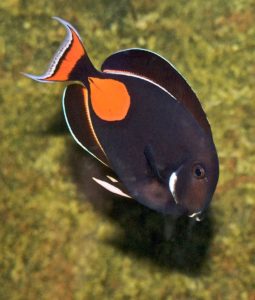 choose from this kaleidoscopic of blues, greens, yellows, oranges, reds, and golds? Scientifically, rationally we know that the color patterns of these fishes may serve to camouflage, to distinguish sexes, to identify a species. But do their
 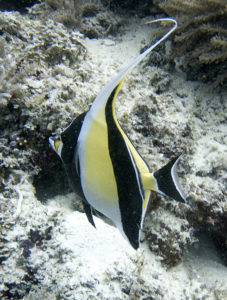 colors really have to be so varied, their forms so diverse, their hues so subtle, and their shades so delicate? Something tells me they do not.
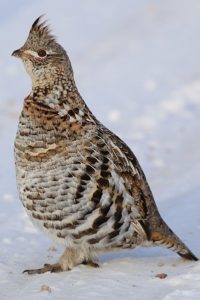 subtract the grouse and the whole thing is dead.” The essence responsible for the unquantifiable quality of the north woods Leopold called the noumenon of material things. It stands in opposition to a phenomenon, something that is concrete and subject to empirical study. Could it be that complexity, diversity, and beauty are reflections of the noumenon that generates the sense of awe we often experience in the natural world? Is it this noumenon, this unquantifiable presence that compel s us to experience with an emotion akin to religious awe a soaring flock of cranes, a flowering prairie, the north woods?
 Van Horn’s view. Within that essay lies this passage. “I heard of a boy once who was brought up an atheist. He changed his mind when he saw that there were a hundred-odd species of warblers, each bedecked like to the rainbow. . . No fortuitous concourse of elements working blindly through any number of millions of years could account for why warblers are so beautiful. No mechanistic theory . . . has ever quite answered for the colors of the cerulean warbler, or the vespers of the wood thrush, or the swansong, or goose music”. Leopold ended his ruminations upon the boy who came to believe with these words. “There are yet many boys to be born who, like Isaiah, may see, and know and consider, and understand together, that the hand of the Lord hath done this.”
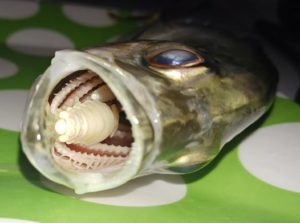 atrophy until only a stump remains. The isopod remains attached to the muscles of this stub and begins to actually function as the fish host’s tongue. The tongue-eating isopod, how macabre is that? I’m sure glad it doesn’t have a taste for humans. It would put a whole new spin on accidentally getting a mouthful of seawater while swimming wouldn’t it?
 enlargement of body regions can be so extreme as to inhibit mobility. Deformity of this sort requires repeated infection with the microfilarial worm Wuchereria over a period of years. Fortunately, although nearly fifteen percent of the human population lives in areas where elephantiasis is endemic, such extreme cases are rare. Anecdotally, during the three years I lived in Southeast Asia, I actually saw only one case of this disease and the person afflicted exhibited only a slight swelling of one leg.
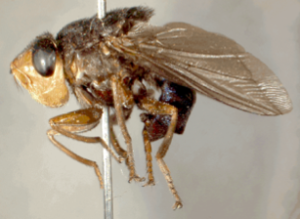 blowfly like we might see buzzing around a road-killed opossum here in Indiana. If that was the habit of Dermatobia as well, we might rest easily in its presence. But, as you can guess, this botfly isn’t nearly as innocuous. Like other flies, this species goes through an elaborate reproductive metamorphosis in which it proceeds, stepwise, from egg to larva to pupa to adult. The larva, again as in other members of the fly Order, is a maggot. But, the human botfly maggot is of rather impressive countenance. The larva is nearly an inch in length, stout in girth, armed with ringlets of stiff, spiny bristles, and has a rather robust pair of jaws.
 were to rid themselves of their grisly cargo. I could also not avoid the realization that this fly would just as opportunely infect me in the same manner. One might wonder how a fly as large as this could so furtively deposit its egg on either a howler monkey or a human. Surely it would be easy to hear its buzzing approach and shoo it away. But here again the amazing deviousness, in regards to completing a life cycle, which has evolved in parasites comes into play. The human botfly uses a less detectable emissary to deliver its egg payload, most often a mosquito.
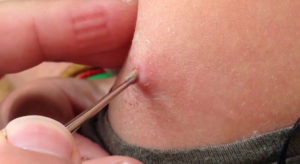 This is assuming, of course, that the physician is somewhat familiar with tropical diseases and recognizes what is going on; this is not always a given.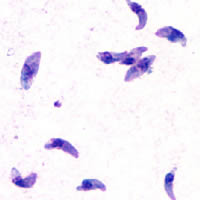
 common in a variety of mammals. These include cats, rodents, pigs, and humans. By some estimates, nearly thirty percent of the world’s human population is infected with Toxoplasma. Normally the protozoan, after causing initial flu-like symptoms, resides in the human body without further affect – or so it was thought.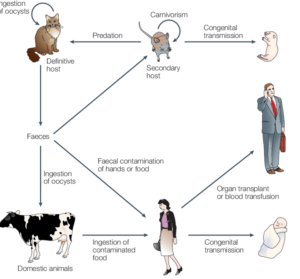
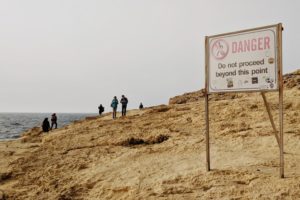 motorists he met with total indifference. Furthermore, he openly criticized the ruling Communist Party, a most dangerous endeavor at that time. Doing research in a war torn area of Turkey, he was surprised that his reaction to nearby gunfire was complete lack of distress and absence of any instinct to take cover. All of these behaviors bore an uncanny resemblance to the daredevil antics of a rat with toxoplasmosis.
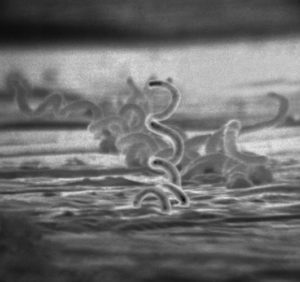 most of her coworkers, she had acquired syphilis during this time. As you know, this is a highly contagious, sexually transmitted disease caused by a bacterium named Treponema pallidum. This bacterium is a type of spirochete, so-called because of its helically spiraled shape.
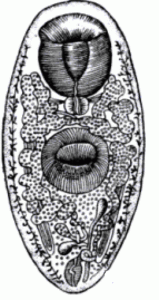 Leucochloridium parasitizes birds. The big problem faced by Leucochloridium, and parasites in general, is how to get from one host to another. Endoparasites are highly and specifically adapted for surviving in the warm, dark, nutrient rich innards of their host. They are not built to function in what for them is the hostile outer world we humans inhabit. Here the atmosphere is highly oxygenated, there is intense sunlight, and ambient temperatures are highly variable. Yet, to continue their species, they must find a way to insinuate their adult progeny into the internal organs of another host.
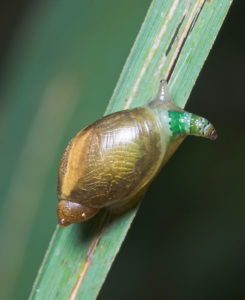 banded, animated appearance bears a remarkable resemblance to a caterpillar. Of course caterpillars are a favorite food of many bird species. And remember, these puffed-up tentacles are packed with fluke larvae very much needing to get into a bird.
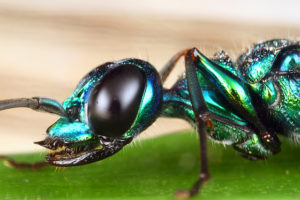 than an inch) wasp with a beautiful metallic greenish-bluish body color. And, it does indeed parasitize cockroaches. As you might guess, it is the manner in which it does so that is dumbfounding.
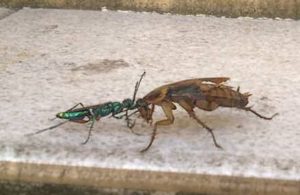 antennae with its jaws, the wasp leads its host to a previously prepared burrow in the ground. Like a well-trained dog on a lead, the cockroach obediently allows itself to be ushered, by the wasp, down into its own tomb.
 Walking within the tropical rainforest of the Peruvian Amazon is always an adventure. One never quite knows what to expect next. It could be a hitherto un-encountered monkey species, an important medicinal plant, a spectacularly colored bird, or a Yagua hunter moving stealthily along the path blowpipe in hand. On this occasion, the encounter involved an insect and it opened a window into an often hidden aspect of tropical rainforest biology both fascinating and disturbing.
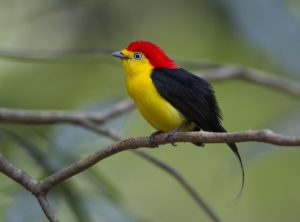 birds, a stunning little wire-tailed manakin – a gem of the rainforest not to mention one of its most accomplished dancers. As we continued along the trail, my eyes wandered over the surrounding vegetation. On the lookout for any movement, I also scanned for the quiet presence of eyelash viper, a species prone to lie about on low vegetation.
 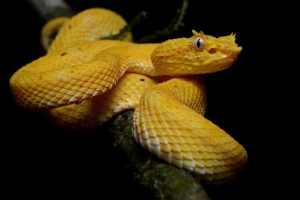 This habit made it a good idea to always look ahead and be aware of where one placed arms, legs, and torso. As I glanced to my left, I noticed a liana creeping from the ground and ascending at a shallow angle up into a nearby tree. Perched upon this liana was a small insect. But what a strange little insect it was. Protruding from its body was what I took to be a pair of exceedingly long antennae. But something didn’t seem quite right; the antennae seemed greatly out of proportion to the insect’s size. Stepping closer, I recognized the insect as a snout beetle. Curculionids are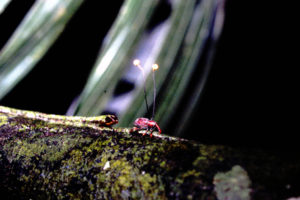
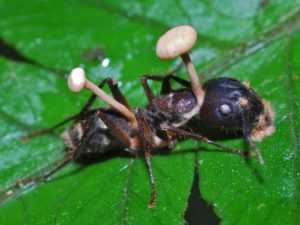 behaviors. Ants infected in such a way may not just climb to a precise height about the ground. They are also induced by the fungal parasite to clamp their jaws onto a stem or leaf petiole with great force. Thus fastened to its perch the ant, after its death, is less likely to fall back to the forest floor before the fungi’s spores are released into the air. Based upon fossil evidence, it appears that this fungus-insect relationship may have evolved several tens of millions of years ago. As this scenario played through my mind, I reflected back to a comment I once heard made by a tropical rainforest biologist. Referring to this type of fungi’s devious biochemical mind control of the host he said, “. . . and we refer to the fungi as a lower form of life?”
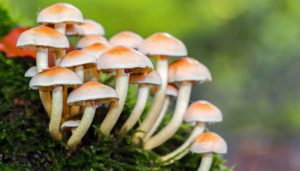 Although they now reside within their own taxonomic kingdom, several generations of biologists once thought of fungi as odd members of the plant kingdom. Fungi lack the indicators of complexity we humans hold in high esteem such as mobility, a central nervous system, and some degree of intelligence. In light of this, the ability of an organism such as Cordyceps to invade an animal and take over control of its mental faculties is downright astounding – and scary. Lest you think that Cordyceps is unique in its uncanny ability to turn its host into a virtual zombie, stay tuned. The Stealth Attack Part 2 will be coming soon.
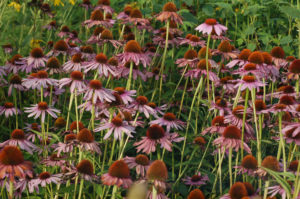
 communities in this area have descriptive names such as Prairie Creek, Prairieton, Indian Prairie, or Shaker Prairie. This morning, at various spots along my road, I am greeted by big bluestem, little bluestem, cup plant, tall goldenrod, common milkweed, Indian grass, and butterfly weed. All these represent remnants of the fingers of tallgrass prairie which probed the vacant spots along the western flanks of North America’s immense, eastern deciduous forest. It is impossible for me to consider these plants and not have my mind rush backwards as though I have exerted a forceful pull on the operative lever of H.G. Well’s time machine. I try with all my might to picture a sea of these plants, and many
 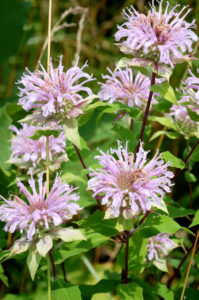 other species of course, stretching away to the horizon. What a vista it must have been; the bluestem, tall as a man on horseback, rippling in the wind and interspersed with inestimable acres of purple coneflower, leadplant, blazing star, rattlesnake
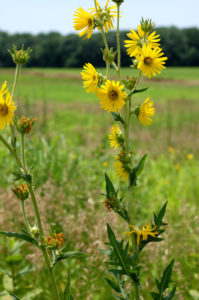 master, grama grass, cutleaf silphium, partridge pea, queen of the prairie, and rosinweed! A herd of American bison, numbering in multiples of a thousand, can be seen slowly cruising among the prairie plants and industriously converting sunlight energy into muscle, sinew, and bone. It is a grand scene that plays in my mind. Admittedly, my vision is tinged with melancholy as I recall that over ninety percent of North America’s tallgrass prairie is now gone. I am reminded of the words of the great conservationist Aldo Leopold. “What a thousand acres of Silphiums looked like when they tickled the bellies of the buffalo is a question never again to be answered, and perhaps not even asked.”
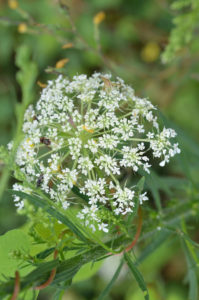 than the scoundrels mentioned above. In fact, I find them downright attractive. Queen Anne’s lace is a lovely, white-flowered native of Europe and a relative of the domestic carrot. There are also dandelions to be seen here and there. Another European native, this plant is also a common member of that diverse assemblage of flora that passes for my lawn. Many berate the dandelion for its audacity in marring their well-manicured yard. But I welcome it and sometimes take advantage of it in the spring when, upon experiencing a dearth of morels, I pick the blossoms and fry them in egg, flour, and butter. Thus prepared they are quite delicious. This morning I see chicory too; its vibrant blue flowers stand out like little neon signs along the road. Another Eurasian import, chicory has a long history of use by humans both as a food and as a coffee substitute.
 taking advantage of the wet soil there. This plant has long intrigued me for the eclectic uses it offered generations of native peoples. The long, durable leaves could be woven into mats for floor or wall. The roots are quite edible. They remind me somewhat of cabbage. I’ve been told that cattail pollen has served as a substitute for flour in making pancakes. It is also a plant much favored for nesting by one of my favorite birds, the red-winged blackbird. Sadly, this plant has been replaced over much of its range here in Sullivan County by a non-native subspecies of Phragmites. This very tall invasive grass grows in dense stands, blocks shorelines, forms virtually impenetrable stands, and in my eyes has none of the virtues of the cattail.
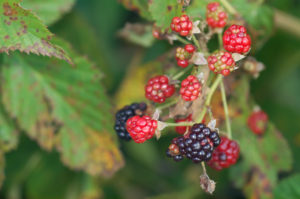 me of the labor intensive work required to collect them. One can expect badly scratched hands as a souvenir of gathering them as well. Here is a life lesson perhaps. Something as coveted as a blackberry cobbler does not come without effort.
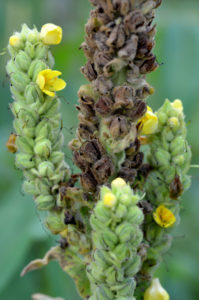 ound the long, erect flower stems to be good substitutes for lances and yes, of course we threw them at each other. The plant having been here for over two centuries, some Native American tribes used mullein for medicinal purposes. Smoking the dried leaves was said to treat respiratory conditions such as bronchitis.
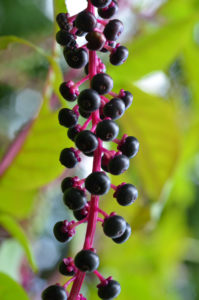 between boilings is recommended. Several species of birds feed on pokeweed berries and are unaffected by its poisonous components phytolaccine, phytolaccatoxin, and phytolaccigenin.
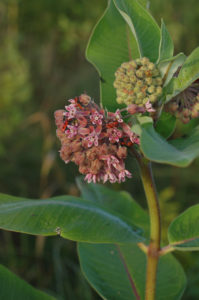 tempted to stop and help disperse the seeds. There was a captivating beauty in seeing the small, flattened, black seeds whisked into the air by a stiff breeze. Riding the air currents, their cotton-like fluff caught the wind and parachuted the seeds to great heights and far distances. I stood mesmerized by the spectacle of these little packets of starch and DNA being launched into the waiting landscape. What was their fate I wondered? How many would fall upon fertile ground? How many would find the inhospitable world of tarmac, concrete, or water? Away from my road, these plants have been significantly displaced by farming and herbicide application. This is detrimental to the monarch butterfly whose population has undergone drastic decline in the past twenty years or so. Their larvae feed exclusively upon milkweed leaves and incorporate the plant’s toxins into their tissues. Thus they become foul tasting and poisonous to predators. I see no monarchs on today’s walk.
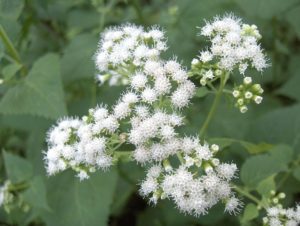 meat and milk of cattle which graze the plant. The result is a disease called milk sickness. This disorder was common in the 1800’s and caused the death of many people in the Midwest. When reading about this plant, the victim most famously mentioned is Abraham Lincoln’s mother Nancy Hanks Lincoln. She died from milk sickness in 1818. Eventually the connection between white snakeroot and the disease came to be understood, apparently as the result of herbal lore passed from a Shawnee woman. The flowers of the plant are attractive and my wife often uses them in fresh-cut bouquets. The fluffy, white blossoms arranged in flat-headed panicles upon the upper stems appear quite innocuous. A curious but uninformed observer would never guess the tragic history of this plant’s relationship with our pioneer ancestors.
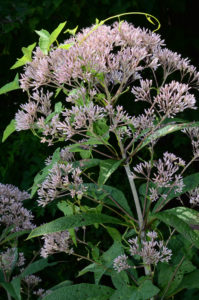 used for any plant that is growing where a human doesn’t want it. Marion Jackson in his The Natural Heritage of Indiana quotes R.W. Emerson’s definition of a weed. I like this one better. “What is a weed? A plant whose virtues have not yet been discovered.” Joe-Pye is a perfect example. Seen along the roadside from an automobile whizzing along at a mile a minute one might indeed be inclined to remark, “Look at that pretty weed.” But gardeners know better. Joe-Pye weed is virtuous as an ornamental plant. Its height and lush, umbrella-shaped, mauve flowers make it stand out as a bold addition to a garden or landscaping project. Furthermore, the very name of the plant alludes to its reputed virtues as a medicinal plant. Legend tells us that Joe Pye was the English name taken by a Native American healer who demonstrated the medicinal properties of the plant to settlers in New England. Teas made from Joe-Pye weed were said to be useful in treating everything from typhoid to rheumatism to impotence. Another name for the plant (gravel-root) was derived from its purported effect in eliminating kidney and gall bladder stones. Are there chemicals in this plant that act as genuine wonder drugs? Although many of our modern drugs are derived from plants, I know of no scientific evidence confirming the efficacy of Joe-Pye weed. Still, as I take leave of this beautiful plant, I can’t help but wonder. Could it be that the Native Americans, with their intimate connection with the natural world, knew something we have yet to fully elucidate and appreciate?
 The boat’s crew made our trip a delightful bundle of exploration, learning, and pure enjoyment. The amiable Captain Mikey delivered his instructions and bits of information with splendidly dry wit and charm. I suspect he would have a good chance of success in a second career as a standup comic. Lucas and Griffin were helpful with equipment fitting and use and hovered over us like protective parents. Snorkel guide Molly gave us an informative introduction to the biology of manta rays and the need for their protection. As I listened to her, I reflected upon the fact that virtually every charismatic animal I learn about these days seems to be under assault.
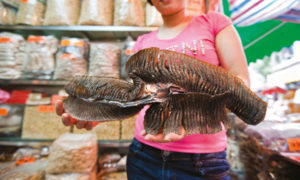 Although there is apparently no historical usage of these structures in traditional Chinese medicine (nor any scientific evidence of their efficacy), the belief has arisen that manta ray gills may provide relief for everything from acne to cancer. Ninety-nine percent of the gill raker trade is centered in Guanzhou, China. The conservation organization SharkSavers reports that sixty-one thousand kilograms (sixty-seven tons) of manta gill material worth US $11 000 000 has been traded there yearly. Such tonnage represents the death of some ninety-seven thousand manta (and devil) rays.
 There may be hope for the manta ray. It has been noted that sales of gill rakers in Guangzhou were 60.5 tons in 2011 and 120.5 tons in 2015 with a subsequent decline due to conservation campaigns and changes in government policies.
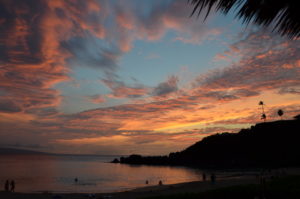 The waters of the Pacific were a lovely deep blue when we began. Slowly they morphed into inky blackness as the sun at last disappeared below the far horizon. Snorkeling with the manta rays was a night mission.
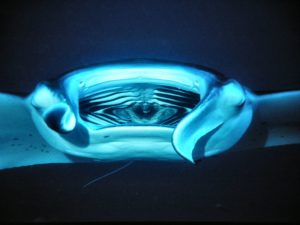 This enormous mouth was propelled upward by the movements of the ray’s wings (pectoral fins) which spanned over six feet. Surging upward it came toward our float; I braced for what seemed an unavoidable impact. But, at the last second, the manta performed a stunningly precise loop within inches of our faces. This maneuver revealed its brilliant white belly which was etched by distinctive black blotches. These “fingerprints” allow identification of individual rays. Downward the ray now plunged into the pillar of plankton. At the bottom another perfect loop was executed and again the ray ascended toward us like some incoming cartilaginous missile. It was quite obvious that the six hundred pound ray was exquisitely aware of its surroundings, the location of its food source, and the curious onlookers looming above it. Mantas have the largest brain to body mass ratio of any fish and studies suggest that they possess self-awareness. How could it not be totally aware of its environment? As I watched the acrobatics of the ray which was soon joined by a comrade, adjectives tumbled from my unconscious. Graceful, powerful, agile, nimble, beautiful – all most appropriate but so exceptionally inadequate in the presence of this astounding creature.

 rainforest as though a phalanx of bulldozers had passed over. Equally shocking was their ability to quickly devour an inattentive human like so much spilled sugar. Many years later, I was to gain a more realistic knowledge of army ant behavior but nevertheless still find them fascinating.
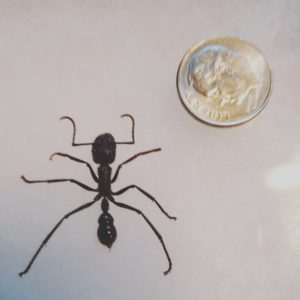 three times that size. Coal black with a wicked looking set of stout mandibles, it was the first ant I had ever encountered that fairly screamed – don’t touch me! Paraponeura also packs a mighty wallop in the form of a venom injecting stinger at the tip of its abdomen. The intense pain of this wound persists for many hours. It is a pain said to be comparable to being shot, thus the name bullet ant. An entomologist by the name of Justin Schmidt has actually developed a scale for ranking the pain caused by the stings of various hymenopterans (ants, bee, and wasps). One must admire both his dedication to science and gallantry in developing his index of pain. Admittedly the degree to which pain is felt is somewhat subjective and, for those allergic to insect stings, any encounter can be life threatening. But be this as it may, Schmidt ranks the bullet ant numero uno when it comes to discomfort. On his pain scale of 1-4, it is a 4+. Schmidt described the sting of a single bullet ant as pain which was “pure, intense, brilliant, agonizing, and long lasting”. He reckoned the intensity of the sting to be several dozen times that of a common paper wasp.
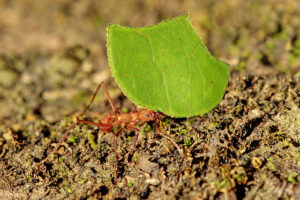 insects (most bees, wasps, other ants, and termites too) live in colonies. Within these colonies, the jobs of scouting for and collecting food, defending against enemies, nest building, reproduction, and myriad other tasks are divided among members of the colony specialized for each role. Typically, a particular body anatomy is associated with such specialization. This allows the job to be done with utmost efficiency. Such division of labor bears an uncanny resemblance to the manner in which the jobs within human society are divvied up. The specialized body forms/occupations within a colony of social insects are referred to as castes.
 member is the lone queen who measures about 20 mm in length. Her primary job is to lay the eggs from which all other colony members are derived. Males form another caste but they are short-lived and their only function is to mate with the queen. Shortly after doing so they die, so most colonies are absent of males for long stretches of time. The remaining members of the leafcutter ant colony belong to the worker caste of sterile females which may number four or five million. The leafcutter worker caste is further subdivided based upon size into minims, minors, media, and majors. Each of these performs some specific job or jobs within the colony. Minims (2 mm) work inside the nest, tending larvae for example. These nests, by the way, can be huge. I once saw a leafcutter nest (they look something like an expanse of tilled soil) in the Manu region of
 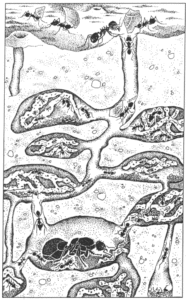 Peru which was forty feet in diameter. Such a nest can go downward into the ground thirty or forty feet and may contain hundreds of interconnected subterranean chambers. Minors protect their foraging sisters and help defend the nest from enemies. Members of the media caste (10 mm) locate food, cut leaves, and transport them back to the nest. The major caste members are large (15-20 mm) with massive heads which house powerful muscles for operating their huge mandibles. These ants are often simply referred to as soldiers and their primary job is defending the colony against attack.
 The variety of defensive chemicals produced is impressive and includes cardiac and cyanogenic glycosides, calcium oxalate, caffeine, nicotine, and terpenoids. Some of these chemicals cause a bad taste, some burn the mouth, others may cause nausea, and certain others may attack an animal’s nervous or cardiovascular system. Unsurprisingly, some plants produce chemicals which are toxic to the fungus that is grown by the ants (the aforementioned terpenoids for example). Such plants are identified and studiously avoided by the ants lest they bring back toxic leaves which would decimate their primary food source – the fungus garden.
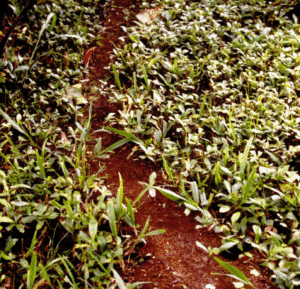 they transport their leaf bits. Media workers build and maintain these trails. Their paths remind me of little, miniature versions of well-trodden human footpaths. As media workers age, they are assigned the garbage detail and work to remove dead ant bodies, bits of dead fungus, and decomposing leaf bits. These waste materials are hazardous to the colony and are dumped outside the nest, above ground in a waste midden.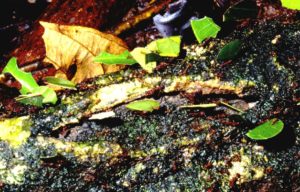
 found, contains a mixture of organic compounds including all the amino acids needed for synthesizing proteins. Since the fungus is unable to break down large protein molecules itself, it relies on the amino acids in the ant rectal fluid to be able to build the protein molecules used for constructing its own mycelial body.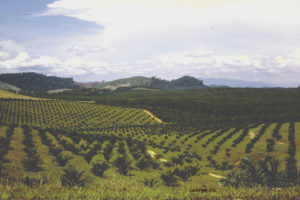
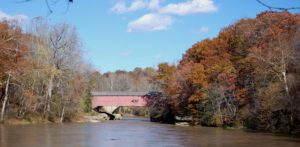
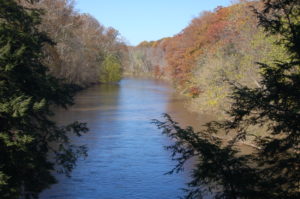
 Jim is gone now. I think about him often and his absence makes my world a lonelier and less interesting place. Jim was an artist whose bright mind roamed the gamut of human endeavors. Music, art itself, science, politics, literature and film; all these fell within his expansive sphere of interests. He could engage in an informed discourse on any of them. He was a man of mercurial temperament who suffered fools poorly. Jim had little tolerance for those who failed to meet the high standards of his broad-minded world view. He could be as explosive as a fumbled vial of nitroglycerine and was especially prone to direct his wrath toward inflexible, narrow minded religious dogma and its attendant intolerance. Politicians were another favored target of his wrath. Woe unto any public servants who traded in the goods which were anathema to Jim – hypocrisy, prejudices, disdain for the environment. His energetic, agile mind – which was prone to roam in unorthodox and inventive directions – was a constant stimulant prompting me in turn to seek, question, and consider. It was wonderfully entertaining to be around him. Jim, in his later years, described himself as an Alchemical Artist. I had always perceived this ancient science as merely a search for the skill of transforming lead into gold, a narcissistic pathway to wealth. But Jim’s exploration and comprehension of alchemy ran much deeper. He described alchemy to me as “. . . a complex and mysterious philosophy which involved a transformation process that sought spiritual renewal and an understanding of both the composition of the universe and how it worked.” A search for theology from a friend who decried organized religion? A quest in the realm of cosmology from one trained in art? Alchemy as the pursuit of spiritual and intellectual gold? These apparent contradictions made me even more aware of the depth of Jim’s interests, astuteness, and beliefs. In light of this, I was intrigued when I ran across author Edward Abbey’s reference to alchemy in describing a close friend of his own, the artist John De Puy . In reference to Du Puy’s brilliance, accompanied by a steady, purposeful intake of strong drink, Abbey said, “I suspected more than alcohol at work here. But the drug, as I would eventually understand, was not chemical but alchemical: the alkaloids of genius.” The alkaloids of genius were surely present in James Loney as well. What more can I say? Jim was the most interesting, thought-provoking person I have ever known. His was the irreplaceable friendship of a lifetime.
 Game fishes are present too. Catfish, bass, bluegill, and crappie swim the waters of Sugar Creek. The stream is considered by many to be the best fishing area for smallmouth bass in the state. Admittedly the fishing Jim and I did was accomplished in a casual sort of way. There were many other subjects of which to speak, other curiosities to consider. We made periodic casts but often simply let the night-crawlers on their harnesses troll along beside the canoe. It seems strange to me, after the passage of so many years, that the strike of the first fish remains so vivid in my memory. The deep pool cutting against the bank as the stream made its bend, the angle and intensity of the sunlight, the excited yells, and the agitated efforts we made to get the canoe turned and stopped, all are as fresh in my mind now as when I saw the tip of my rod whip toward the water’s surface. We did manage to get pulled onto the sandbar on the inside of the bend. We sat there and cast into the small, swift running pool (it couldn’t have been more than ten yards long) and time after time were rewarded. It seemed that every smallmouth bass and channel cat in this stretch of Sugar Creek had taken refuge in this one little spot. What a wonderful time we had.
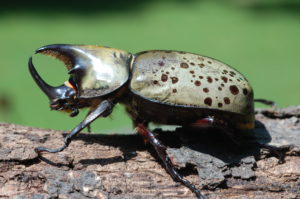 discovered a species of beetle that was previously unknown to science. Knowing whether or not one has a new species in hand requires expertise of course. Thus it is that one will find specialists in the taxonomy (identification and classification) of any particular group of organisms one wishes to choose. Some taxonomists go for the gold and tackle a group with charismatic star-power such as the dinosaurs. Others may, with forethought, choose a group of organisms in which taxonomic competition among biologists is less intense. Harvard entomology professor emeritus E.O. Wilson chose to become a myrmecologist (ant biologist) and in the process carved himself a niche within which he holds sway as the world’s acknowledged expert on this group. Some biologists will opt for an even more arcane group. This almost certainly guarantees them supremacy of expertise in their chosen area.
  For example, when I was in graduate school, one of the professors in our department was an expert on the taxonomy of psocids. You may rightly ask, what in the world is a psocid? Many psocids look like tiny flies. Others, being wingless, resemble lice. Technically speaking, they belong to a group of insects known as booklice. They are quite small, one or two millimeters in length, and feed on lichens and fungi. Psocids often perch on shrubby vegetation. This particular professor could regularly be seen wandering about the campus with the tools of his trade – a black umbrella, a stout club, and an aspirator. Upon approaching a shrub, he would open the umbrella, hold it upside down under the vegetation, and suddenly begin flailing the branches with his club as though possessed by the sudden onset of some sort of mania. This frantic and, to outward appearance, bizarre routine would be met with open-mouthed astonishment by passersby. It really was quite entertaining to watch him at work. Of course, he was collecting psocids. Pummeling the shrubbery would cause any psocids present to fall onto the black umbrella. Here, despite their tiny size, the whitish body color would make them readily apparent. The aspirator was essentially a test tube with a stopper in it. From the stopper protruded two tubes. One was a short glass piece which the prof placed in his mouth. The other was a longer plastic tube which was positioned next to a psocid perched on the umbrella. A gentle suction applied to the glass tube resulted in the psocid being vacuumed into the test tube. A very interesting operation it was and one which made me admire the entertaining eccentricity of many scientists even more.
 The research station sat along the main trunk road which led from Kuala Lumpur, near the west coast, to the city of Kuantan lying hard by the South China Sea to the east. The facility was comprised of two buildings. One served as a laboratory where specimens collected during our forays into the rainforest could be identified, observed, and catalogued. The other building contained dormitories for the students, two small private rooms for staff, and a kitchen where the three meals students and staff took each day were prepared. In front of the dormitory, a small but well-manicured lawn sloped downward toward the nearby forest edge and the Sungei Gombak which flowed just inside the wall of trees. Although called a river, this stream was only a few yards across. I suppose a world-class long-jumper could have cleared it in a single leap. Nevertheless, the stream’s constant, muffled roar was a pleasant addition to the symphony of rainforest sounds falling steadily upon one’s ear. The stream was also a fruitful site should one want to search for caecilian larvae or foam-nesting tree frogs.
 company with the cheery Malay students. All the while we could gaze out onto the nearby mountains, their slopes cloaked with a thick covering of dipterocarp forest.
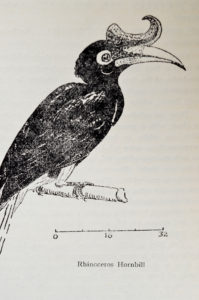
 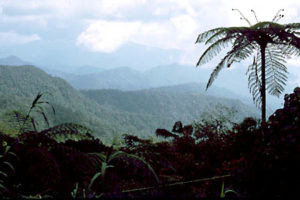 The superstars of this forest were the massive Shorea trees whose grayish- leaves caused them to stand out among the numberless greens of their brethren. Some of these Shorea were giants who towered over two-hundred feet above the forest floor. Occasionally a guttural call or a thrashing, leafy branch would alert us to the presence of a band of dusky or silvered leaf monkeys moving through the canopy. A flying lizard (Draco) might be seen soaring across the lawn its rapid, direct “flight” causing one to momentarily mistake it for a bird. On more than one occasion, the morning was embellished by a flyover of one of the rainforests largest birds, the rhinoceros hornbill. Occasionally the flight would be announced by the magnificent bird’s ringing, honking call. At other times the hornbill might pass above us without voice, its presence announced only by the deep, far-carrying sound from the beats of its five feet long wingspan.
  They reminded me of the chugging of a slow moving steam locomotive. Breakfasts were often graced by the exotic, high-pitched whooping of white-handed gibbons or the deep, booming voice of siamangs issuing from the far hills as they performed their morning routine of establishing territorial boundaries and maintaining the unity of their groups. Looking back I recall a magical place, a kind of Eden where I found myself joyous simply to be alive, euphoric over my good fortune in being present in one of planet earth’s last, great wild places.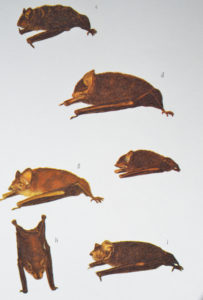
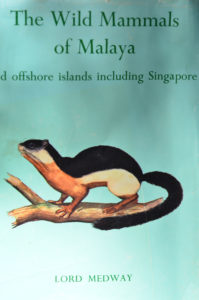 authoritative source of information on the mammals of Malaysia. Scanning through the tube-nosed bat descriptions, I found the closest match to be one with the common moniker of bronzed tube-nosed bat. It seemed pretty straight forward but, as I read the species description in Medway, I was startled. The text stated that not only was this bat known only from Malaysia, it was known from a single specimen taken in the neighboring state of Pahang. With rising pulse rate, I again ran through the measurements, observed the coloration, and referred to Medway’s description. I again came up with bronzed tube-nosed bat. Still not convinced that I hadn’t made an error in utilizing the taxonomic key, I ran through the characters a third time. Again the final couplet of the key led to Murina aenea, the bronzed tube-nosed bat.
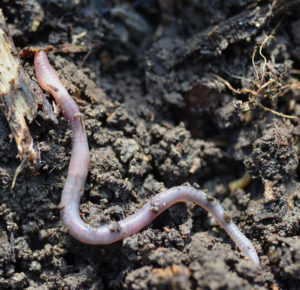 I speak of Lumbricus, Aporrectodea, Diplocardia and their ilk. Local fisher-folk may refer to them as night crawler, red worm, wriggler, or dew worm. Earthworms belong to a widely distributed and biologically successful group known as the annelid worms. They are so-called because of the division of the body into small, ring-like segments (annuli). Leeches and certain marine worms are also annelids. But it is earthworms that are involved in this story.
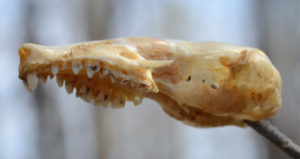 Slowly inching forward by taking mouthful after mouthful of soil; it would be fortunate that our tiny brain could not foresee the inevitable, gruesome end as three dozen sharply pointed teeth render us into mole fodder.
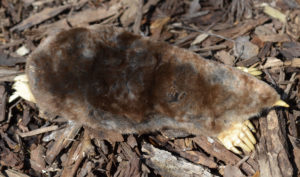 through the topsoil. I really was quite flabbergasted as I made the connection between the emergent flight of the earthworms and the sudden appearance of the mole. It was rather obvious that the worms were sensitive to the vibrations produced by the approaching mole and had taken to the surface in a last ditch effort to avoid becoming a meal. To me this seemed a remarkable piece of behavior from animals with a brain about the size of the period at the end of this sentence. If the worms recognized the vibrations as a threat, did this imply that they could remember? Didn’t this behavior suggest not only the capacity of memory but, more specifically, the ability to recall that the vibrations were produced by their arch nemesis, the mole? Did this indicate that they then had to analyze this memory and decide upon an appropriate response? In other words, were they actually capable of advanced neural integration? I don’t want to be anthropomorphic but the earthworm equivalent of memory, integration, and response borders on what I had always assumed were marks of intelligence. Darwin, in his aforementioned studies, devised experiments to observe how worms handled leaf material of different shapes. The results suggested to him that they did possess intelligence. He compared their abilities to the highly developed dexterous sense possessed by people who are deprived of sight.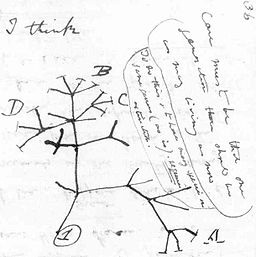
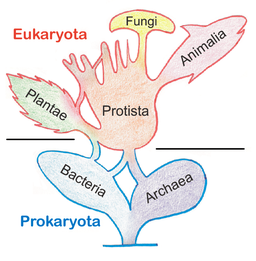
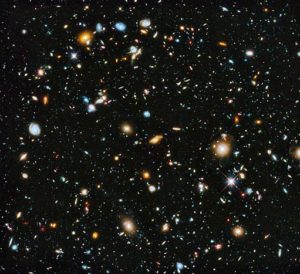 that populate the billions of galaxies of our universe. From some of these stars, the elements that, so far as we know, comprise all matter were then generated. The calcium in our bones, the nitrogen in our DNA, the gold filling in our tooth, all these have been forged from the titanic forces generated by exploding stars. Once formed, the elements have yielded molecules and compounds which have made possible the evolution of life itself. From the first primitive cells, whose precise origins are lost in the vapors of time, have arisen all of the organisms, simple to complex, which have graced the earth.
 Indiana, I found evidence (in the form of bivalves and crinoids ) that the
  land I now walked upon was once the bottom of a sea. Further east the Appalachians had risen to snow-capped heights rivaling the Rockies. Over the eons, the ravages of wind, water, and ice have reduced them to their present aspect of rounded, rolling domes – the Smoky Mountains. The very continents themselves, we now know, wander restlessly over the earth’s mantle. Viewed from space, the visage of earth today is very different than when the dry lands were merged to form the immense super-continent known as Pangaea.
 the arthropods also came to be the dominate invertebrates of the dry lands of the planet. Today nearly one million species of insects alone are known to science. The echinoderms, the spiny-skinned starfish and urchins, in their rich variety dispersed themselves through the earth’s vast oceans. Descendants of this group became the ancestors of the fishes which eventually claimed dominion over the waters of the world. From one group of ancient fish antecedents came the audacious back-boned creatures which first climbed from the water and into the forbidding world of air and sun. Thus, the first amphibians evolved some four hundred million years ago. Over the next three hundred million years there emerged the reptiles, the birds, the mammals. For over one hundred and fifty million years, the dinosaurs reigned as the dominant group of terrestrial vertebrates.
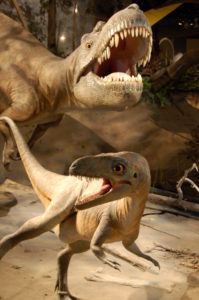 The sudden extinction of the dinosaurs allowed birds, descendants of theropod dinosaurs, to take a turn as the most biologically successful of vertebrates. They were joined in this new world order by the mammals, themselves descended from reptilian ancestors known as synapsids.
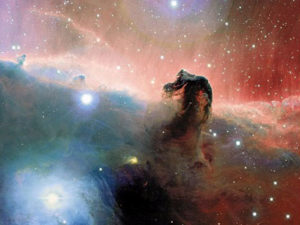 extraordinary event . . . that brings very welcome consequences. In my contemplation of life on earth, this seems to fit what has happened. I find the mere fact of my own existence, let alone the plethora of earth’s organisms past and present, extraordinary. I certainly consider the wondrous biodiversity of our planet a welcome consequence. It is vanity I suppose that compels me to also consider my own existence a welcome consequence of the unfolding universe story.
 Darwin was correct about a good many things. Perhaps he was in this case also.
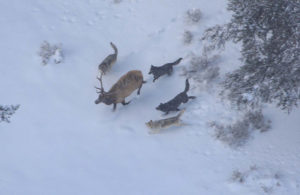 The reduction of elk numbers within the park has had some interesting ecological ripple effects. With the reintroduction of wolves, elk were no longer able to unconcernedly loaf about in the stream valleys of the park. Here they had browsed heavily upon riparian vegetation such as willow, cottonwood, and aspen trees. With the number of elk reduced, tree growth flourished. This in turn has led to an increase in the number of beavers within the park. These rodents eat the bark of trees such as willow; they also use the branches and logs cut from such trees to construct their dams and lodges. More beavers mean more beaver ponds. As a result there has been an increase in available habitat for waterfowl such as ducks, geese, and swans. Improved riparian habitat is also beneficial to songbirds (nesting habitat), trout (less siltation into streams), and moose (more browse and cover). Others animals which have benefited from the reintroduction of wolves in Yellowstone include scavengers such as ravens, eagles, and bears which may feed on the remains of wolf kills. The coyote population within Yellowstone NP was also cut by fifty percent. Wolves will kill coyotes and both species will prey upon the others’ pups given the chance. When wolves were removed from the park, the population of coyotes increased greatly. Coyotes are too small to prey upon elk but they were the primary predator upon pronghorn antelope calves. When coyote numbers were reduced by the presence of wolves once again, the population of antelopes in the park underwent an increase. Coyotes also compete with foxes and so populations of the latter have also gone up as a result of the presence of wolves. This so-called trophic cascade of impacts shows what a restored keystone species can accomplish given the opportunity and the time.
 There were grins all around and glances were exchanged that asked, was that really a wolf? But yes, it was. There was no mistaking this deep, chesty, bawl for the high-pitched yapping of a coyote. We really had heard a wild gray wolf.
 What beautiful birds they are. The female, like most members of the avian clan, shows her beauty in an understated perfection of camouflage. Just this morning, I watched her perched in the ash tree near the nest box. Shifting my gaze caused me to struggle a bit to relocate her feathered body of subtle browns and mottled breast. The male showed no need for such subtlety. The wild, orange-red eyes and beak were set upon a head of iridescent green marked with bold highlights of white. The chestnut breast and fawn flanks were overlain by a back that seemed black but suddenly morphed into lustrous emerald when he shifted position and the morning light struck from a different angle. One would be hard-pressed to find another North American bird which surpasses the beauty of a male wood duck.
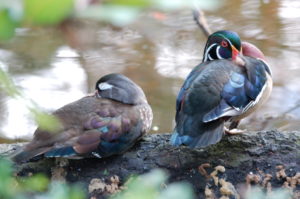 The duck escaped but barely. The male I saw this morning appeared again later in the day. This time with a red-shouldered hawk tailing him and showing what seemed a sinister interest. Yes, I think sneaking in and out of the nest box is a good idea.
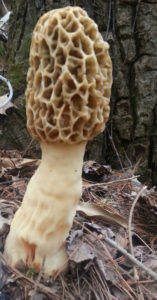 Successfully finding morels is something of a knack. Hunters who can spot a tiny morel at thirty paces and come home from a quest with bulging sacks of these delicacies are highly regarded in these parts. I dare say that I hold such a person in much higher esteem than a typical member of the Indiana legislature. I love to mushroom hunt but few would consider me an adept in this art. Nevertheless, along with my wife and daughter, we find our share. Weekends spent searching our woodlands for black, half-free, gray, and yellow morels have provided many an hour of pleasant companionship for us.
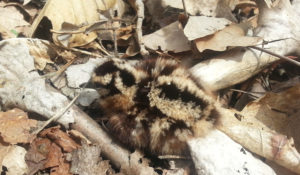 Tiny little balls of downy fluff they were. Their coloration was so cryptic and matched the dead leaves upon which they sat so well that I was somewhat astonished to have even spotted them. Not a millimeter did they move. Not an eye blinked. I carefully reached down and touched a down feather. Still as stone the crafty little mote remained. By such instinct do they remain invisible to fox and weasel. I slowly moved away secure in the knowledge that mom, listening intently just over the ridge, would soon return and lead the little brood away. Who could think of morels when bequeathed such a rare glimpse into the secret life of the woodcock?
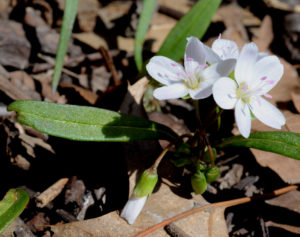 Digging into the soil I retrieve a filbert sized corm from one of the plants. Brushing away the soil, I pop the morsel into my mouth, crunch down, and am rewarded with an earthy, potato flavor. Nearby stands half a dozen specimens of toothwort. This small, white-flowered herbaceous plant is quite common in the woodlands of Indiana. I recall that the name refers to use of the plant’s segmented root as an herbal remedy for toothache. This in turn causes me to ponder upon the fact that
 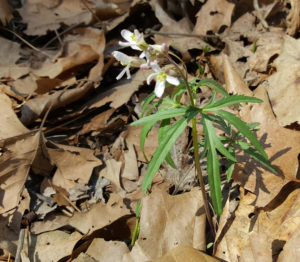 practically every plant I see around me was likely used in some way by Native Americans. Whether it be food, fiber, or building material that was needed, a plant that fit the bill could be found in their environment. The pioneers who displaced the native inhabitants were also aware, likely to a lesser degree, of the natural pharmacy and food larder that surrounded them. Sadly this is a knowledge and skill that is as nearly extinct among modern Hoosiers as the passenger pigeon. My guess is that the vast majority of modern humans are cerebrally disconnected from their continued reliance upon the plant kingdom for our survival. I dig up a small, two inch root of a toothwort and sample its texture and taste. Yes, very crispy as I had heard and it does indeed taste like horseradish.
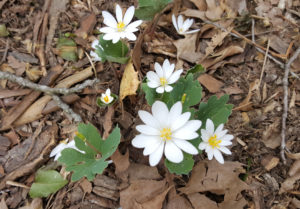 Of course I can’t neglect consideration of the woody plants. Redbud, my favorite, dogwood, and spicebush transform the nearly leafless forest into an impressionist opus. There is so much to see and muse upon here. How could anyone keep their mind on morels?